
Most people treat networking as an activity. The best professionals treat it as an investment.
Like any investment, networking should produce returns. The challenge is that most returns are indirect, delayed, and difficult to track.
A simple way to measure networking ROI is to focus on outcomes, not interactions.

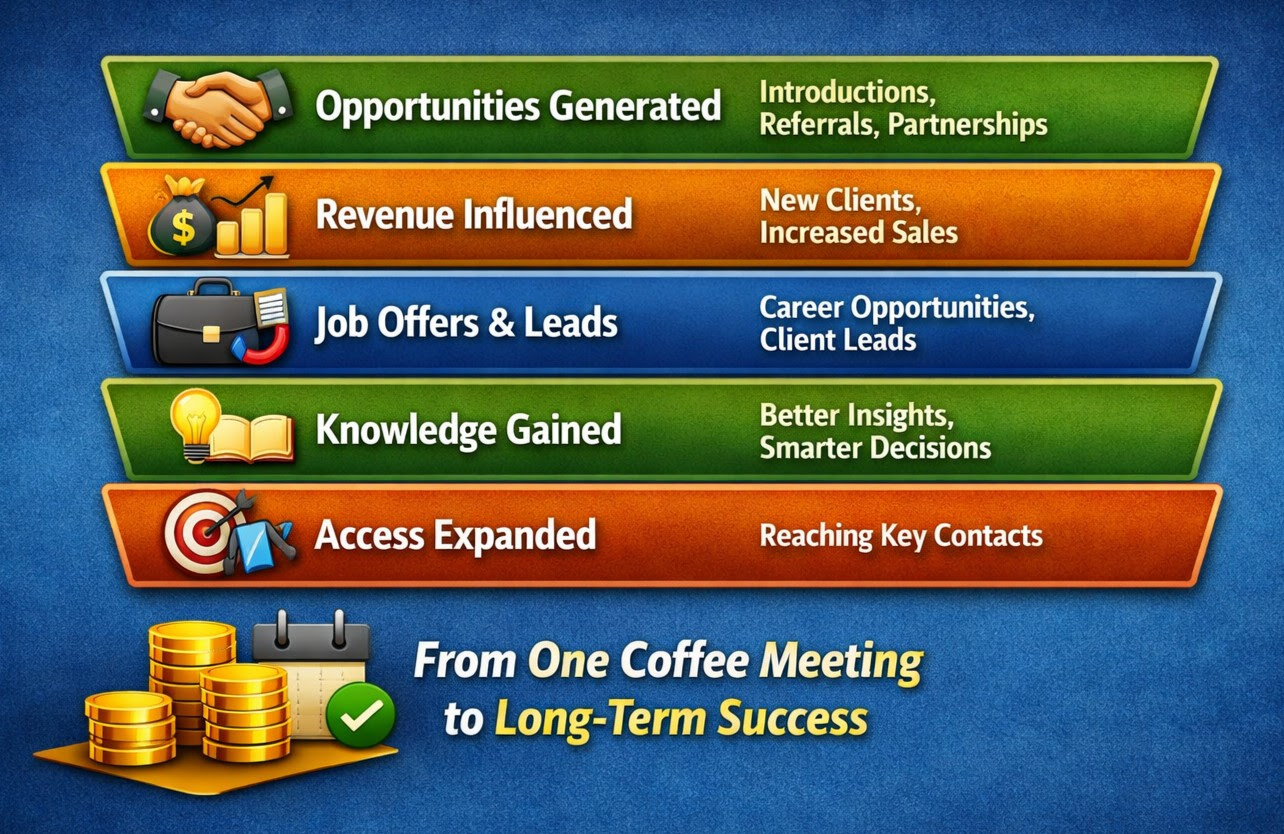
Track
- Opportunities generated (introductions, referrals, partnerships)
- Revenue influenced
- Job offers or client leads received
- Knowledge gained that improved decisions
- Access to people you couldn't previously reach
👉 For example — if one coffee meeting leads to an introduction that becomes a $20,000 client six months later, the ROI is obvious. The meeting itself wasn't the value. The relationship was.
Another useful metric is network growth quality. One meaningful relationship with a decision-maker is often worth more than 100 new LinkedIn connections.
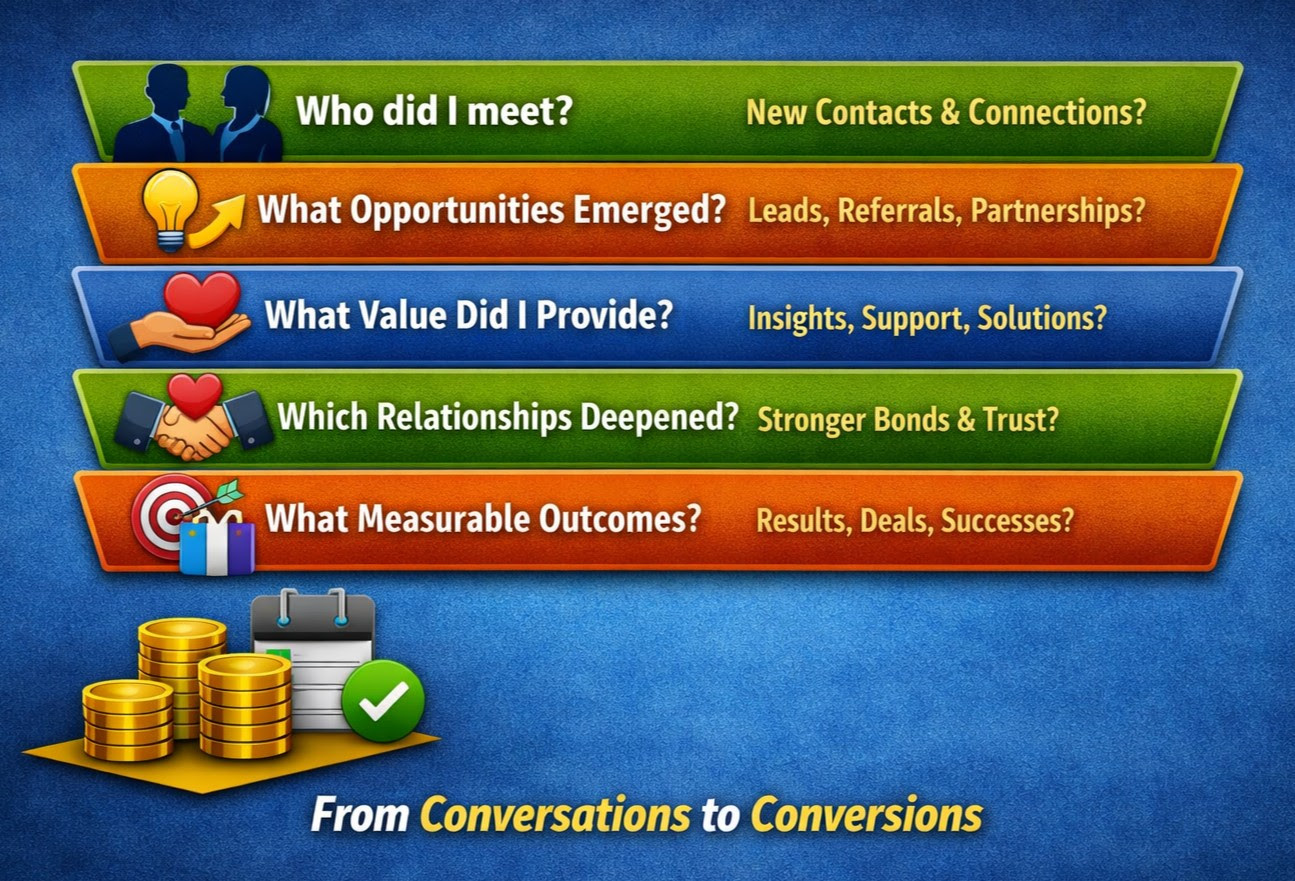
Ask Yourself Every Quarter
- Who did I meet?
- What opportunities emerged?
- What value did I provide?
- Which relationships deepened?
- Which introductions created measurable outcomes?
The biggest mistake is expecting immediate returns. Networking ROI compounds. A conversation today may generate an opportunity years later.
The professionals who get the highest returns don't focus on collecting contacts. They focus on creating value, building trust, and staying visible over time.
Networking isn't measured by the number of people you know. It's measured by the opportunities, insights, and relationships that continue to pay dividends long after the first conversation.